
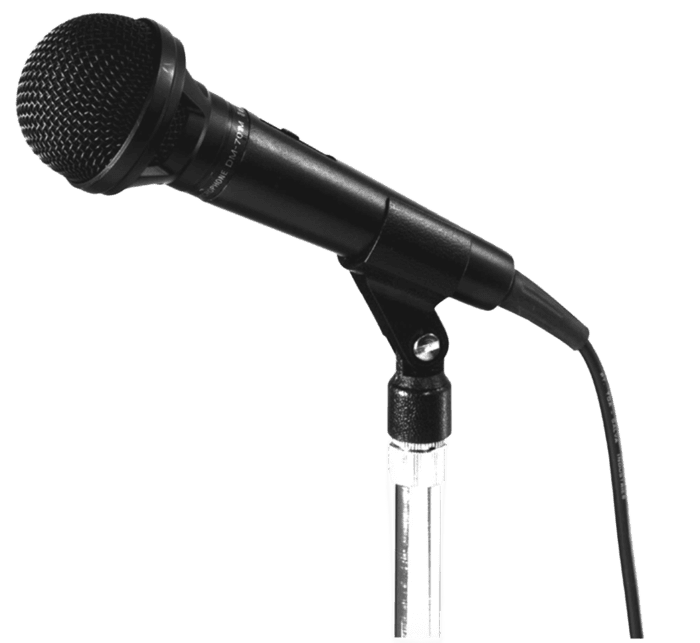
DM-1100
- Dynamic moving-coil element designed for public address and speech paging
- Unidirectional cardioid pickup pattern isolates speech from ambient room noise
- Built-in short-off slide switch reduces mechanical switching noise
- Heavy-duty metallic chassis with included 7.5m single-core shielded cable
Specifications
FAQs
What applications is the TOA DM-1100 handheld microphone designed for?
The TOA DM-1100 is purpose-built for commercial public address, voice paging, and basic speech reinforcement. It excels in environments like school assembly halls, retail paging stations, church podiums, and administrative facilities where reliable speech clarity and easy operation are primary requirements.
How does the cardioid polar pattern on the DM-1100 improve vocal clarity?
The unidirectional cardioid pickup pattern captures audio primarily from directly in front of the capsule while attenuating unwanted background noise coming from the sides and rear. This off-axis rejection significantly minimizes acoustic feedback from overhead loudspeakers and improves voice intelligibility in echoey rooms.
What type of cable and connector comes bundled with the TOA DM-1100?
The microphone comes packaged with a durable 7.5-meter (24.6 feet) single-core shielded cable terminated with a standard 1/4-inch (6.3 mm) unbalanced phone plug. This direct plug configuration allows seamless connection to TOA commercial mixer amplifiers and standard PA input ports without requiring adapters.
Does the TOA DM-1100 require batteries or phantom power to operate?
No, the DM-1100 is a passive dynamic microphone. It relies on electromagnetic induction generated by the vocal sound waves moving the voice coil within its magnetic field. It requires zero battery power or phantom power, making it a maintenance-free plug-and-play speech microphone.
How does the integrated slide switch handle mechanical pops and noise?
The DM-1100 utilizes a short-off slide switch designed to short-circuit the element contacts when toggled to the OFF position. This prevents pops, thumps, or electric clicks from being amplified through the public address speakers when users turn the microphone on or off.